
Olbersdorf
 Olbersdorf
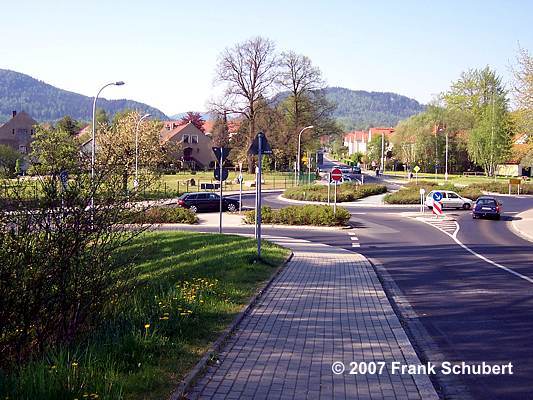
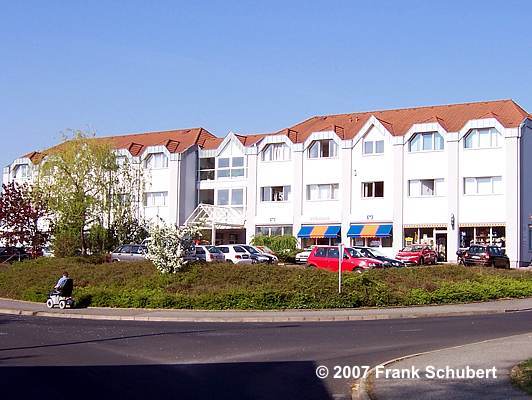
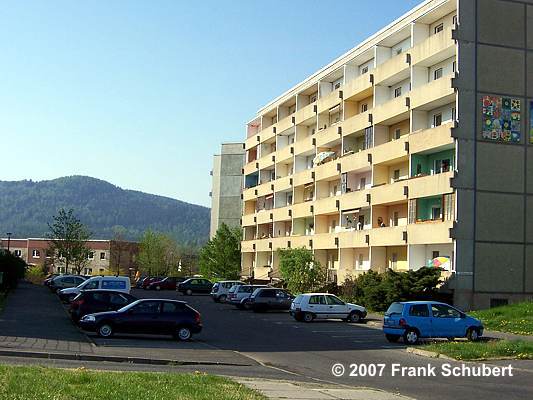
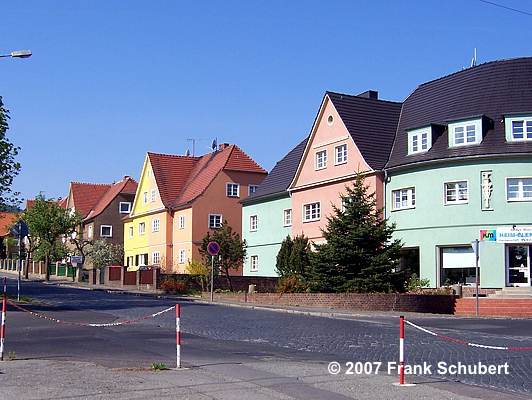
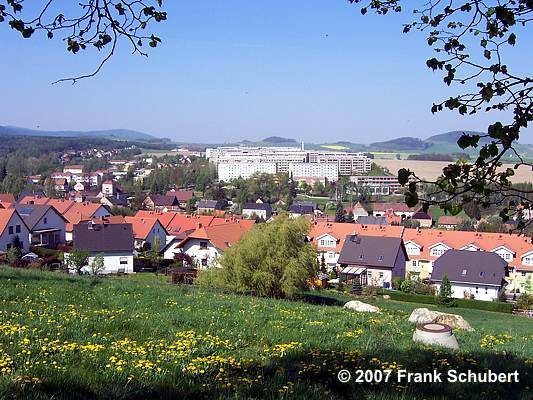
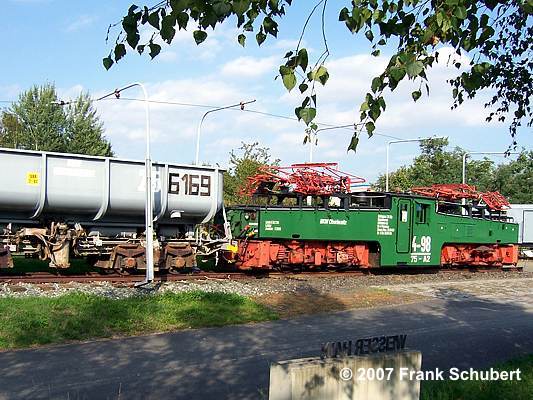
lies on half way between the town Zittau and the Zittauer mountains. The
village with approximately 5960 inhabitants is also called the "Gate to the
Zittauer mountains". The most important connecting streets of Zittau to the
villages Oybin and Jonsdorf as well as other places, lead through this
village, also the narrow-gauge railway of the SOEG (Sächsisch-Oberlausitzer
Eisenbahngesellschaft mbH).
Olbersdorf
lies on half way between the town Zittau and the Zittauer mountains. The
village with approximately 5960 inhabitants is also called the "Gate to the
Zittauer mountains". The most important connecting streets of Zittau to the
villages Oybin and Jonsdorf as well as other places, lead through this
village, also the narrow-gauge railway of the SOEG (Sächsisch-Oberlausitzer
Eisenbahngesellschaft mbH).
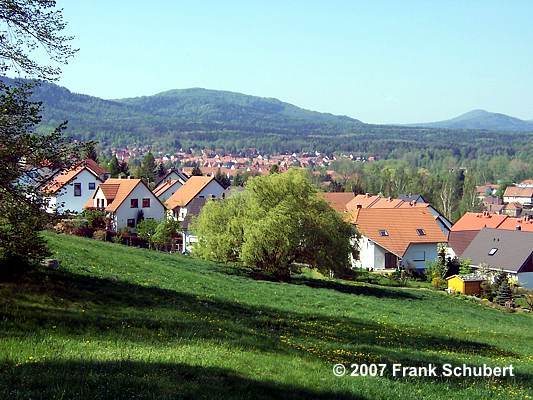 Seen
historically, Olbersdorf was an industry-community. Defining for this region
in the early years of the 19.-20. century was the brown coal open-cast
mining. After the political change in 1989 Olbersdorf altered its structure
from a industry-community to a residental-community with middle-class
business in the craft- and industrial sector. Service, hotel business and
gastronomy are placed here as well.
Seen
historically, Olbersdorf was an industry-community. Defining for this region
in the early years of the 19.-20. century was the brown coal open-cast
mining. After the political change in 1989 Olbersdorf altered its structure
from a industry-community to a residental-community with middle-class
business in the craft- and industrial sector. Service, hotel business and
gastronomy are placed here as well.
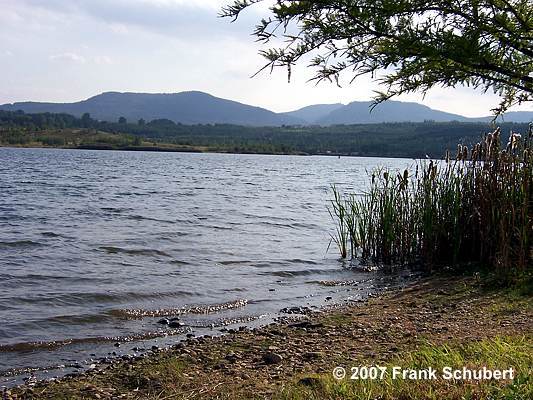 1991
the last coal-train departed and the last open-cast mining was closed. The
flooding of the open-cast mining and a redevelopement followed, which
resulted in a creation of a recreational area with mediterran flair. The
over 60 hectars big area around the lake offers a campside at the
North-beach. A guarded neat sandy beach is accessible free of charge.
Additinally, there is an ungarded beach at the southern side of the beach, a
surf-school and Saxony`s biggest Beachvolleyball-place.
1991
the last coal-train departed and the last open-cast mining was closed. The
flooding of the open-cast mining and a redevelopement followed, which
resulted in a creation of a recreational area with mediterran flair. The
over 60 hectars big area around the lake offers a campside at the
North-beach. A guarded neat sandy beach is accessible free of charge.
Additinally, there is an ungarded beach at the southern side of the beach, a
surf-school and Saxony`s biggest Beachvolleyball-place.
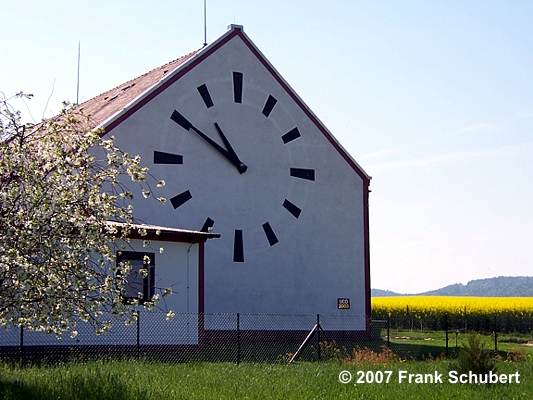 Among
the "Volksbad" (a open-air bath) with a constant water-temperature of 22°C
and family-friendly admission prices, you can find a "Clock-museum" as well
Saxony´s biggest outside Clock. This exhibition is operated by the
"Olbersdorfer Uhrenclub e.V." and can be visited during the whole year.
Olbersdorf has a well marked hiking trail-net which allow trekking-tours
into the Zittauer mountains and further over the border crossing points to
North-Bohemia.
Among
the "Volksbad" (a open-air bath) with a constant water-temperature of 22°C
and family-friendly admission prices, you can find a "Clock-museum" as well
Saxony´s biggest outside Clock. This exhibition is operated by the
"Olbersdorfer Uhrenclub e.V." and can be visited during the whole year.
Olbersdorf has a well marked hiking trail-net which allow trekking-tours
into the Zittauer mountains and further over the border crossing points to
North-Bohemia.
A short historical review
|
Year
|
Event
|
| 1319 | First mention in the documents as "Albersdorf". |
| 1429 | For the first time, the spelling "Olbersdorf" is found in documents. |
| 1496 | Olbersdorf becomes property of the Oybiner cloister, the monks enlive the agriculture. |
| 1547 | Olbersdorf becomes under administration of Zittau again. |
| 1651 | A school in Olbersdorf is mentioned the first time. |
| 1732 | There are 192 houses in Olbersdorf. |
| 1771 | The 1. census counted 1658 inhabitants (at this time, together with village "Eichgraben") |
| 1800 | First coal-mining. |
| 1856 | Foundation of an iron-foundry through C.A. Gruschwitz (became later a mechanical engenering factory). |
| 1883 | Dedication of the church (1985 it was torn-off for expansion of the open-cast mine). |
| 1890 | The narrow-gauge railway is build in the Zittauer Gebirge-Mountains. |
| 1912 | Coal-mine in open-cast-mining " Glueck auf!" ("Good luck!"), was used until 1939. |
| 1922 | The open-air-bath , named "Volksbad" , is opened. |
| 1922-23 | Build of new settlement-houses and consequently enlargement ot the residental-stock. |
| 1927-28 | An exoneration-street for the traffic between Zittau and the mountains was built. |
| 1929 | Inauguration of the new school. |
| 1946 | After the end of the WWII, many businesses were expropriated and were changed into publicly owned bussineses (VEB) and the farmers had to join together in publicly owned agrar companys (LPG). The school started its regular teaching again. |
| 1947 | Resumption of the coal-production in the open-cast-mining. |
| after 1950 | Build of new buildings (by the "AWG") in the direction Oybin. |
| 1986 | Dedication of the new church-community-center at the "Butterhuebel" after demolition of the old church in 1985. |
| 1988 | The new-building-area in the upper-village is build, 3 kindergartens and a school are opened here in 1989. |
| 1990 | Close of the open-cast-mine. |
| 1991 | In the area of the open-cast-mine begins the redevelopment and recultivation. |
| 1994 | The open-air-bath become a "fun-bath" with attractions like a big slide. |
| 1996 | Takeover of the narrow-gauge railway by the "Saechsisch-Oberlausitzer"-railroad-company (SOEG). |
| 1999 | Flooding of the hole of the open-cast-mine is completed and the area is used as relaxion-area after a regional-garden-show. |